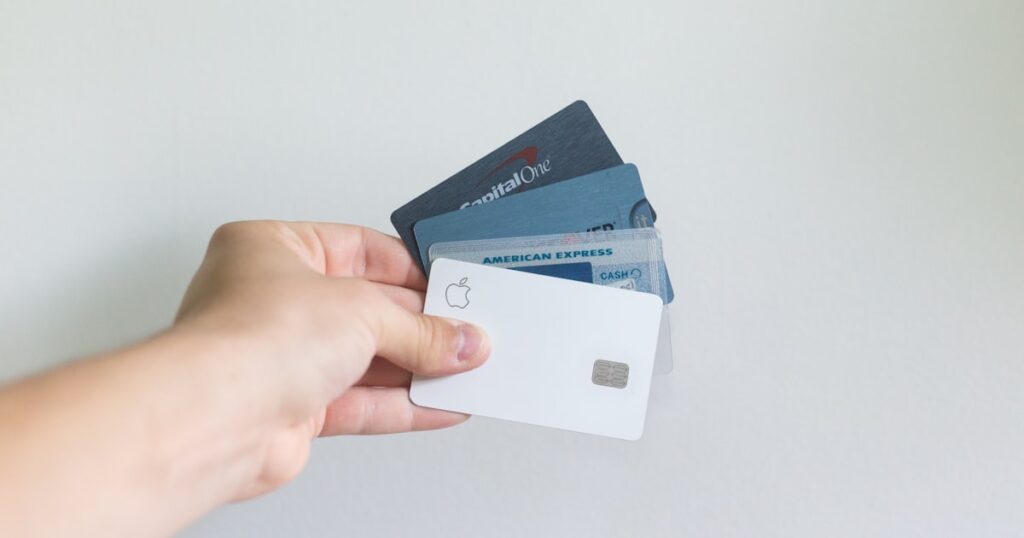
Most international students on an F1 visa arrive in the U.S. with the same credit profile: blank. No U.S. history, possibly no SSN, and a bank account that’s been open for two weeks. Mainstream credit card applications ask for a Social Security number and a credit score — two things you don’t have yet.
But there are cards built for this exact situation. Getting one during your first semester, rather than your last, makes a measurable difference in where your credit score sits by the time you graduate and look for a job or apartment.
Here’s what works, what doesn’t, and how to start from zero.
Do F1 Students Qualify for U.S. Credit Cards?
Yes — with the right cards. F1 visa holders aren’t barred from having U.S. credit cards. The challenge is that most traditional card applications assume you have a Social Security number and existing credit history.
F1 students typically don’t have either on arrival. Most are ineligible for an SSN (unless they have campus employment authorization). And U.S. credit bureaus have no file on you yet.
What you can have: a passport, an I-20, a U.S. address, and in some cases an ITIN. Several card issuers now accept exactly this combination — and a few don’t require any U.S. tax ID at all.
Getting an ITIN as an F1 Student
You can get an ITIN as an F1 student even without U.S. income, in some situations. If you receive a scholarship that’s subject to U.S. tax withholding, or if you have income from on-campus employment, you’re required to file a U.S. tax return — which qualifies you to apply for an ITIN with IRS Form W-7.
Having an ITIN opens up far more card options: Capital One, Discover, Chase at the branch level, and most other major issuers. step-by-step ITIN application guide
If you don’t have income and therefore don’t file a tax return, you won’t qualify for an ITIN — but you still have good card options.
Best Credit Cards for F1 Students in 2026
Firstcard — Best for Students Without SSN or ITIN
Firstcard is the clearest option for F1 students who just arrived. No SSN, no ITIN, no credit history required. You verify with a passport and student visa, fund a small deposit, and get a Mastercard that reports to all three bureaus — Equifax, Experian, and TransUnion.
The free version has no annual fee. Firstcard+ at $4.99/month earns cash back. For someone in their first weeks of school with no documentation beyond passport and I-20, this is typically the only card available.
Zolve — Best for Students With Enrollment Proof
Zolve built its credit card around the F1 and OPT student experience. Approval is based on your enrollment at a U.S. university, visa type, and intended income — not a credit score. No SSN required. The card is unsecured (no deposit), with limits typically starting at $500 to $1,000.
The application asks for your I-20, passport, and school enrollment documentation. Zolve reports to all three bureaus. For students at recognized universities with clear enrollment documentation, this is one of the only ways to get a real credit limit from day one.
Discover it Student Cash Back — Best If You Have an SSN
If you have an SSN through campus employment or CPT/OPT, the Discover it Student Cash Back card is exceptional. 5% cash back in rotating quarterly categories (grocery, restaurants, gas, Amazon), 1% everywhere else, no annual fee, and Discover matches your first year of cash back.
Discover explicitly markets this card to students with limited or no credit history. Approval odds are higher than most cards for thin-file applicants. The card also comes with free FICO score monitoring every month, which matters when you’re building from zero.
Bank of America Customized Cash Rewards for Students — Best Bank Branch Option
Bank of America accepts ITIN applications at the branch level. With an ITIN (even for students with campus income), you can apply in person at a Bank of America branch for their student card: 3% cash back in a category you choose, 2% at grocery stores, 1% everywhere else. No annual fee.
This requires more documentation than the fintech options — ITIN letter, passport, I-20, proof of enrollment, proof of address. But it’s a major U.S. bank on your credit file, which carries weight when you later apply for apartments or car loans.
Capital One Secured Mastercard — Best Fallback With ITIN
If the above options don’t work for your situation, Capital One’s secured card is the most reliable fallback. $200 deposit, ITIN accepted, no prior U.S. credit history required. It’s not glamorous, but it reports to all three bureaus and Capital One has a clear upgrade path to unsecured cards after 6 months of good behavior.
Comparison Table
| Card | SSN Required? | Deposit? | Annual Fee | Best For |
|---|---|---|---|---|
| Firstcard | No (passport only) | Small deposit | $0 | No-documentation students |
| Zolve | No | None | $0 | Students with enrollment docs |
| Discover it Student | Yes (or SSN via employment) | None | $0 | Students with SSN |
| BofA Customized Cash Student | ITIN accepted at branch | None | $0 | Students with ITIN |
| Capital One Secured | ITIN accepted | $200 | $0 | Any student with ITIN |
How to Apply as an F1 Student — Document Checklist
Getting your documents together before applying saves multiple trips and rejected applications. Here’s what each type of application needs:
For fintech cards (Firstcard, Zolve):
- Valid passport with F1 visa stamp
- I-20 form issued by your university
- U.S. mailing address (dorm or apartment)
- Email address and phone number
For bank branch applications (BofA, Chase, Capital One):
- Passport with visa
- ITIN letter from IRS (if applicable)
- I-20 form
- Proof of U.S. address (lease or utility bill)
- Bank account statement (if you have one)
- Proof of income or scholarship (if any)
For branch applications, call ahead and ask specifically whether the branch processes ITIN credit card applications. Not every branch does — some downtown or campus-area branches that serve many international students are better equipped.
What to Do in Your First Year
The first card you get is a foundation, not a destination. Here’s how to treat it:
Use it for one recurring expense. A streaming subscription, a phone bill, or groceries — something you’d pay anyway. This keeps the card active without tempting you to overspend.
Pay the full balance every month. Never carry a balance. On a secured card earning no rewards, carrying a balance means paying 20%+ APR on money you didn’t need to borrow. Set up autopay for the statement balance amount.
Keep your utilization under 30%. If your limit is $200, keep your balance under $60. If your limit is $500, stay under $150. Utilization is calculated at the statement closing date — pay down before then, not just before the due date.
Check your credit score monthly. Discover and Capital One both offer free FICO score monitoring to cardholders. Watching the number go up over the months is motivating and helps you catch problems early.
After 6 months, add a second account if your score allows. A second card or a credit-builder loan adds another positive account and speeds up score growth. building credit as an immigrant
Common Mistakes F1 Students Make
Applying for several cards right before a big purchase, expecting immediate approval and limit. Multiple applications in a short window trigger multiple hard inquiries, lowering your score when it’s just starting to form.
Using a card as a debit card — spending up to the limit because “it’s there.” On a $200 secured card, maxing it out every month tanks your utilization score even if you pay in full.
Closing the card before leaving the U.S. Many students think they should cancel everything before graduating. If you’re staying for OPT or planning to return, keep the card open. The credit history you’ve built follows you indefinitely.
Missing a payment during finals week. Set autopay from day one. One missed payment can drop a score in the 600s by 60 to 80 points, and it stays on your report for 7 years. The CFPB has free resources on monitoring your credit.
What Happens to Your U.S. Credit After Graduation
If you move to OPT or H1B status after graduating, your U.S. credit history stays with you. The files at Equifax, Experian, and TransUnion are tied to your name, date of birth, and address — not your visa type. Everything you built as an F1 student compounds into your future score.
Students who start on F1 and transition to H1B often have strong enough scores by their first full-time job to qualify for premium rewards cards, car loans without a cosigner, and apartment leases without an extra deposit.
That’s the payoff for starting early.
Frequently Asked Questions
Can F1 students get credit cards without a job?
Yes. Firstcard and Zolve don’t require income verification in the traditional sense. Some cards count parental support or scholarship funds as income. The key is to be honest on the application — inflating income to qualify is fraud and can get the account closed.
Does getting a credit card affect my F1 visa status?
No. Holding a credit card is a normal financial activity and has no bearing on your immigration status. Accumulating significant unpaid debt, however, could theoretically be raised in future visa interviews as evidence of ties to the U.S. — though this is rarely an issue in practice.
Can I use a parent’s card instead?
You can be added as an authorized user on a parent’s card (even a foreign card in some cases), but this usually doesn’t help build your U.S. credit history because the parent’s account isn’t reporting to U.S. bureaus. You need your own U.S. card with your name on the account.
What credit score will I have after 1 year as an F1 student?
With one card, on-time payments, and utilization under 30%, most F1 students reach 640 to 680 after 12 months. Adding a second account (another card or a credit-builder loan) in month 6 often pushes this to 680 to 710 by the one-year mark.
Is it safe to give my passport to Firstcard or Zolve?
Both companies use standard identity verification platforms (similar to what banks use for KYC — Know Your Customer compliance). They photograph or scan your document during verification but don’t retain the physical document. The process is similar to identity verification you’d do at any bank.
Bottom Line
F1 students have real credit card options — they just aren’t the mainstream ones. Start with Firstcard or Zolve if you just arrived, or a Capital One secured card once you have your ITIN. Use the card for one small recurring expense. Pay it in full every month. Check your score quarterly.
The credit history you build on an F1 visa is the same credit history that will qualify you for an apartment after OPT, a car loan in your first job, and every other financial decision that comes after graduation. Starting in semester one is worth it.
The EducaDinero editorial team specializes in personal finance for Latino immigrants in the USA. Our content is reviewed against official sources including the IRS, CFPB, and federal financial regulators. We cover credit building, ITIN banking, and financial products for immigrants — topics we have researched across hundreds of hours of interviews with immigrants, bank representatives, and certified financial counselors. We do not accept payment for product placement.