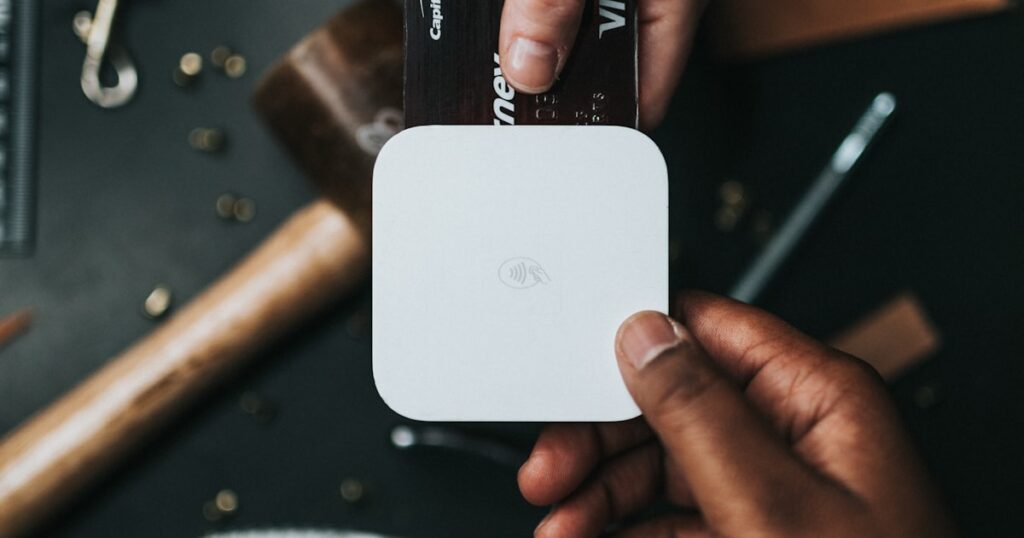
A secured credit card is the most reliable tool for immigrants to build U.S. credit from zero. Not the most glamorous. Not the most rewarding. But the most reliable — because it doesn’t require a credit history to get approved, it reports to all three major credit bureaus every month, and it works for anyone with an ITIN.
If you don’t have a Social Security number but you have an ITIN, you have access to secured cards at most major banks. This guide covers exactly how they work, which ones accept ITIN, and what to do month by month to graduate to a real unsecured card as fast as possible.
What Is a Secured Credit Card?
A secured credit card works like any credit card — you make purchases, receive a monthly statement, and pay the bill. The difference is the deposit.
When you open a secured card, you put down a cash deposit — usually $200 to $500. That deposit sits in a bank account and acts as collateral. It becomes your credit limit. If you deposit $200, you can charge up to $200. If you deposit $500, your limit is $500.
You don’t spend the deposit. You spend with the card, pay the card bill, and the deposit stays in the account. When you close the card (or graduate to an unsecured card), the deposit is returned to you in full — minus any unpaid balance.
Every month, the issuer reports your payment activity to Equifax, Experian, and TransUnion — the same three credit bureaus that track every American’s credit history. From the bureau’s perspective, a secured card payment looks identical to an unsecured card payment. Your score builds exactly the same way.
How ITIN Works With a Secured Card Application
When you apply for a credit card, the issuer uses your Social Security number to pull your credit report from the bureaus. An ITIN functions as a tax identification number, not an SSN — but many issuers accept it for the same purpose.
The ITIN tells the issuer who you are. For secured cards, where your deposit reduces the issuer’s risk, many banks are willing to accept ITIN as identification even when they wouldn’t for unsecured products.
Here’s how to apply with ITIN:
- Online applications: Some issuers accept ITIN in the SSN field online. Capital One and Discover have been reported to work. Others may reject automatically — in those cases, a branch visit is necessary.
- Branch applications: Chase, Bank of America, Citibank, and Wells Fargo all accept ITIN for secured card applications at the branch level. You fill out the same application form — the branch representative can process ITIN applications that online systems reject.
- ITIN-first issuers: Some issuers built their process around ITIN from the start. These process ITIN the same as SSN with no workaround needed.
If you don’t have an ITIN yet, getting one is the first step. File IRS Form W-7, attach a certified copy of your passport, and include a completed tax return or qualifying exemption document. Processing takes 7 to 11 weeks by mail, or much faster through a Certified Acceptance Agent (CAA). [INTERNAL: how to get an ITIN number fast]
Which Secured Cards Accept ITIN in 2026
Capital One Secured Mastercard
Capital One accepts ITIN and is one of the most immigrant-friendly major issuers for secured cards. You can often apply online with ITIN — enter your ITIN in the SSN field. Approval is faster than at a branch.
Deposit options: $49, $99, or $200 depending on your credit profile. With no U.S. credit history at all, most applicants land at $200. Your initial credit limit is $200, but Capital One reviews accounts automatically at 6 months and can increase limits without additional deposit.
No annual fee. No foreign transaction fee.
Discover it Secured
Discover accepts ITIN for secured card applications. The Discover it Secured is exceptional by secured card standards: 2% cash back at gas stations and restaurants (up to $1,000 in combined purchases per quarter), 1% on everything else, and Discover matches all cash back earned in your first year.
The graduation process starts at month 7 — Discover reviews your account and can move you to an unsecured card without a new application. $200 minimum deposit. No annual fee.
Citibank Secured Mastercard
Citibank accepts ITIN at the branch level. If you have an existing Citi bank account, your approval odds as an ITIN holder are higher. $200 minimum deposit. No annual fee. Reports to all three bureaus.
Citi’s advantage for immigrants is its international banking presence. If you have a Citi account in your home country, you can establish a relationship before arriving in the U.S. and use that relationship when applying here.
Bank of America Customized Cash Secured
Bank of America accepts ITIN at the branch level and offers one of the better secured cards in terms of rewards — 3% cash back in a category you choose, 2% at grocery stores and wholesale clubs (up to $2,500 per quarter combined), 1% elsewhere. No annual fee.
Minimum deposit is $200, maximum $5,000. A higher deposit gives you a higher credit limit, which can help with utilization scoring if you plan to use the card heavily. Bank of America has a clear upgrade path for secured cardholders who demonstrate consistent payment history.
Wells Fargo Secured Credit Card
Wells Fargo accepts ITIN at their branches. The secured card is straightforward — no rewards, but it reports to all three bureaus and Wells Fargo reviews accounts after 12 months for unsecured upgrade eligibility. Minimum deposit $300. No annual fee.
OpenSky Secured Visa
OpenSky requires no credit check at all and doesn’t pull your credit report during the application. This makes it useful for ITIN holders who are concerned about what a hard inquiry might reveal — or more often, for people who just arrived and don’t have any U.S. credit file yet. $200 minimum deposit. $35 annual fee (the main drawback).
How a Secured Card Builds Your Credit Score
Your FICO score is calculated from five components:
| Factor | Weight | What a Secured Card Does |
|---|---|---|
| Payment history | 35% | Every on-time payment adds a positive entry |
| Credit utilization | 30% | Keep balance under 30% of your limit |
| Length of credit history | 15% | Clock starts when account opens — don’t close early |
| Credit mix | 10% | One card type is fine; adds installment loan later |
| New credit | 10% | Hard inquiry drops score slightly at application |
A secured card primarily builds your score through payment history and utilization. Every month you pay on time is a positive entry. Every month you keep your balance low is a healthy utilization mark.
After 3 months, your first FICO score typically appears. Most immigrants with no prior U.S. history start in the 580 to 620 range. After 12 months of clean payments: 650 to 680. After 18 months: 680 to 720+.
The Right Way to Use a Secured Card
The deposit is not a spending account. You make purchases on the card, then pay the card bill — ideally the full statement balance every month. The deposit only gets used if you stop paying your bills entirely.
Use the card for predictable, recurring purchases: your phone bill, a streaming subscription, groceries. Amounts you’d spend anyway, so there’s no temptation to overspend.
Pay the full statement balance before the due date every month. You avoid interest (secured card APRs average 26.13% in 2026 — carrying a balance is expensive). And you build payment history just as effectively as someone who carries a balance.
Watch your utilization. The statement closing date — not the due date — is when the issuer reports your balance to the bureaus. If your statement closes on the 15th, your balance on the 15th is what gets reported. Pay down before the 15th to report low utilization, then pay the remaining statement balance before the due date.
When and How to Graduate to an Unsecured Card
Graduation means the issuer converts your secured card to an unsecured card, returns your deposit, and often increases your credit limit. This typically happens after 6 to 18 months of consistent on-time payments.
Discover starts reviewing at month 7 — the earliest of any major issuer. Capital One reviews at month 6. Bank of America and Citi typically review after 12 months. Wells Fargo after 12 months.
Some issuers graduate you automatically — Discover and Capital One often do this without you requesting it. Others require you to call or request an upgrade through your account portal.
When you graduate:
- The account number may change (new card issued) but the account age stays on your credit report
- Your deposit is returned, usually within 2 to 3 billing cycles
- Your credit limit typically increases beyond the original deposit amount
- The account type changes from “secured” to “unsecured” in issuer systems, though bureaus don’t distinguish between the two
Common Mistakes That Slow Your Progress
Depositing the maximum to get a high limit — then carrying a high balance. A $1,000 deposit with an $800 balance is 80% utilization. A $200 deposit with a $40 balance is 20% utilization. Utilization percentage matters more than the raw numbers.
Applying for multiple secured cards at once. One card is enough to start. Multiple applications mean multiple hard inquiries and multiple accounts that all report as new — which can actually lower your average account age.
Closing the account as soon as you get an unsecured card. Keep the secured card open if possible. The account age, credit limit, and payment history contribute to your score even after you stop using it regularly. Put one small recurring charge on it and set autopay.
Choosing a card that doesn’t report to all three bureaus. Some “credit builder” products report to only one bureau or none at all. Always confirm that the card reports to Equifax, Experian, and TransUnion before applying — otherwise you’re building a history that most lenders can’t see.
Frequently Asked Questions
Can I get a secured card without going to a branch?
Yes, for some issuers. Capital One and Discover accept ITIN in online applications for many applicants. OpenSky processes entirely online with no credit check. For Chase, Bank of America, and Citi specifically, branch applications have significantly higher ITIN approval rates than online applications.
What happens to my deposit if I miss payments?
The issuer can apply your deposit to cover a missed payment after 60 to 90 days of non-payment. Before that point, missing a payment just results in a late fee and a negative mark on your credit report. The deposit is a last resort — not a buffer for regular missed payments.
Can I increase my credit limit on a secured card?
Yes, usually by adding more deposit. Capital One, Discover, and most major issuers allow you to add to your deposit and increase your limit. Some issuers also grant unsecured limit increases on top of your deposit if your payment history is strong.
Is a secured card worth it if I can get an ITIN card without a deposit?
Both build credit the same way if they report to all three bureaus. A deposit-free option like Firstcard or Zolve is better if you need to preserve cash. A secured card from a major bank like Capital One or Discover is better if you want a path to that bank’s full product lineup later. Both are legitimate choices — the right answer depends on your situation. [INTERNAL: best credit cards for immigrants without SSN]
Do secured cards have higher interest rates than regular cards?
Yes. The average secured card APR in 2026 is 26.13%, compared to around 23.66% for rewards cards. This doesn’t matter if you pay in full every month, which you should. The cost of carrying a balance on a secured card is high enough that it should never be treated as a loan.
Bottom Line
A secured credit card with an ITIN is the most reliable path to building U.S. credit history for immigrants without an SSN. Capital One and Discover are the best options for online ITIN applications. For branch applications, Chase, Bank of America, and Citi all accept ITIN with the right documentation.
Deposit $200. Use the card for one monthly expense. Pay the full balance before the due date. In 12 to 18 months, you’ll either graduate automatically or have a strong enough score to apply for any card you want. The deposit comes back. The credit history stays.
The EducaDinero editorial team specializes in personal finance for Latino immigrants in the USA. Our content is reviewed against official sources including the IRS, CFPB, and federal financial regulators. We cover credit building, ITIN banking, and financial products for immigrants — topics we have researched across hundreds of hours of interviews with immigrants, bank representatives, and certified financial counselors. We do not accept payment for product placement.